
Lunar New Year 2026
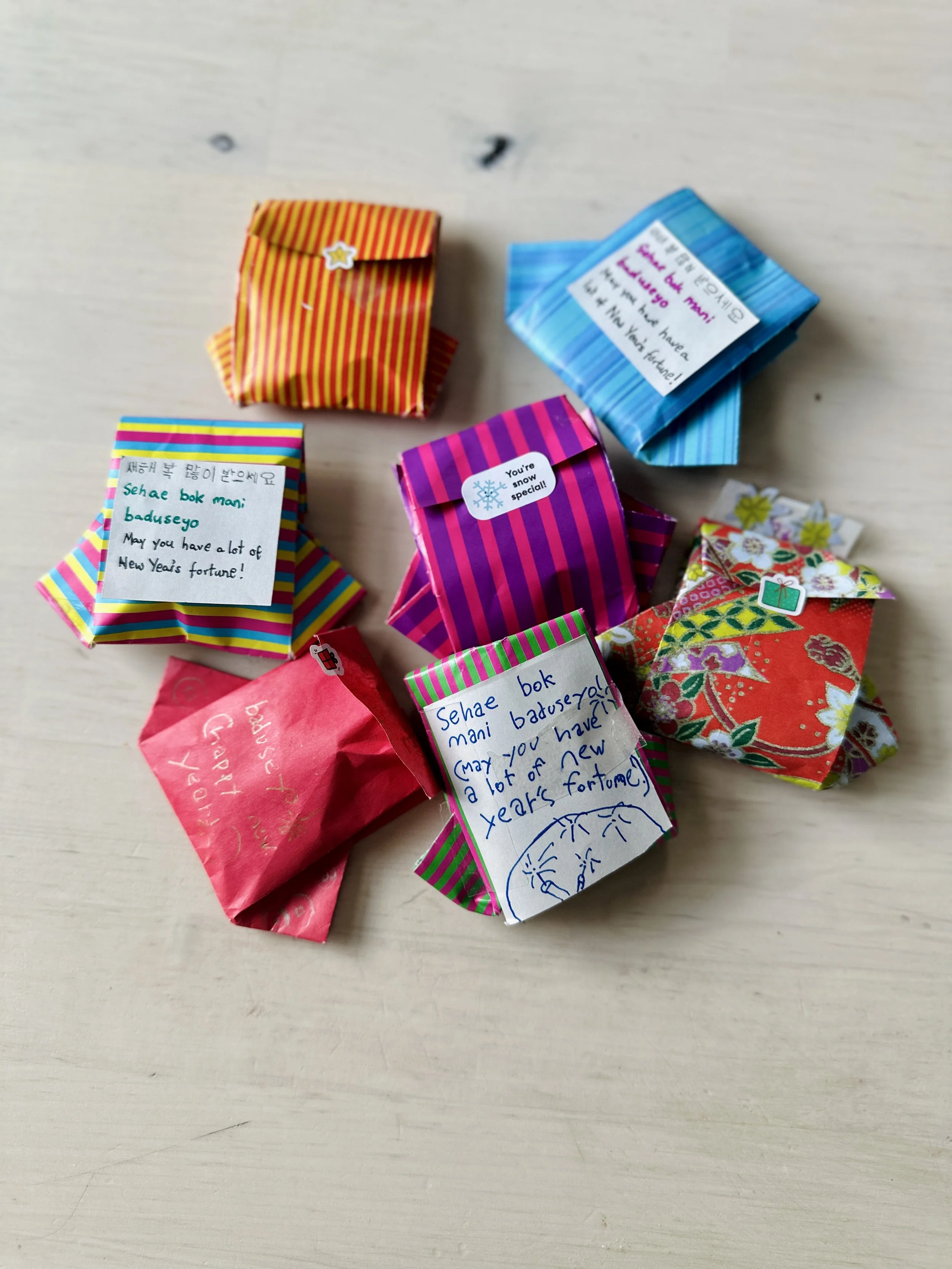
Little bokjumoni (envelopes) of luck and love :)
What a beautiful day of AWE we had yesterday! We woke up to a cloudy morning, a sky heaving with the promise of snow, long overdue.
As precious as this promise was, so was the excitement of learning about the Lunar New Year! Cozying up by the fireplace, we started our day by watching a few videos about the Lunar New Year celebrations in Korea, China, Taiwan, and Vietnam.
Some videos we loved:
We followed up the videos with some lovely picture books. Find the full list here.
Since my daughter and I have been watching some K-dramas lately, we were thrilled to learn some Korean words from the book, Tomorrow is New Year’s Day! They loved bowing and wishing us New Year’s good fortune and blessings in Korean - “ Sehae bok muni baduseyeo!”
It was also from this book that the kids got inspired to make the bokjumoni for their friends and their parents. We had movie plans with our friends last evening, and they thought it would be nice to share these then. The kids filled up these little pockets with mildly sweet Indian cookies they had helped bake previously.
As we learned about the Lunar New Year, my daughter asked how they picked this particular day to be the Lunar New Year, why this New Moon, why not any other New Moon?
These questions led us down a rabbit trail to explore the use of Lunar-Solar calendars across different cultures. We were curious about how Hindus, Chinese, and other South Asians celebrate their traditional New Year at different times, even though they all follow the Lunar-Solar calendar. We discovered that the Chinese divided their year into 24 segments, with the Winter Solstice marking their 11th month, and how the Hindus divided their year into 12 months. DD drew a picture to illustrate the Chinese Luni-solar calendar.
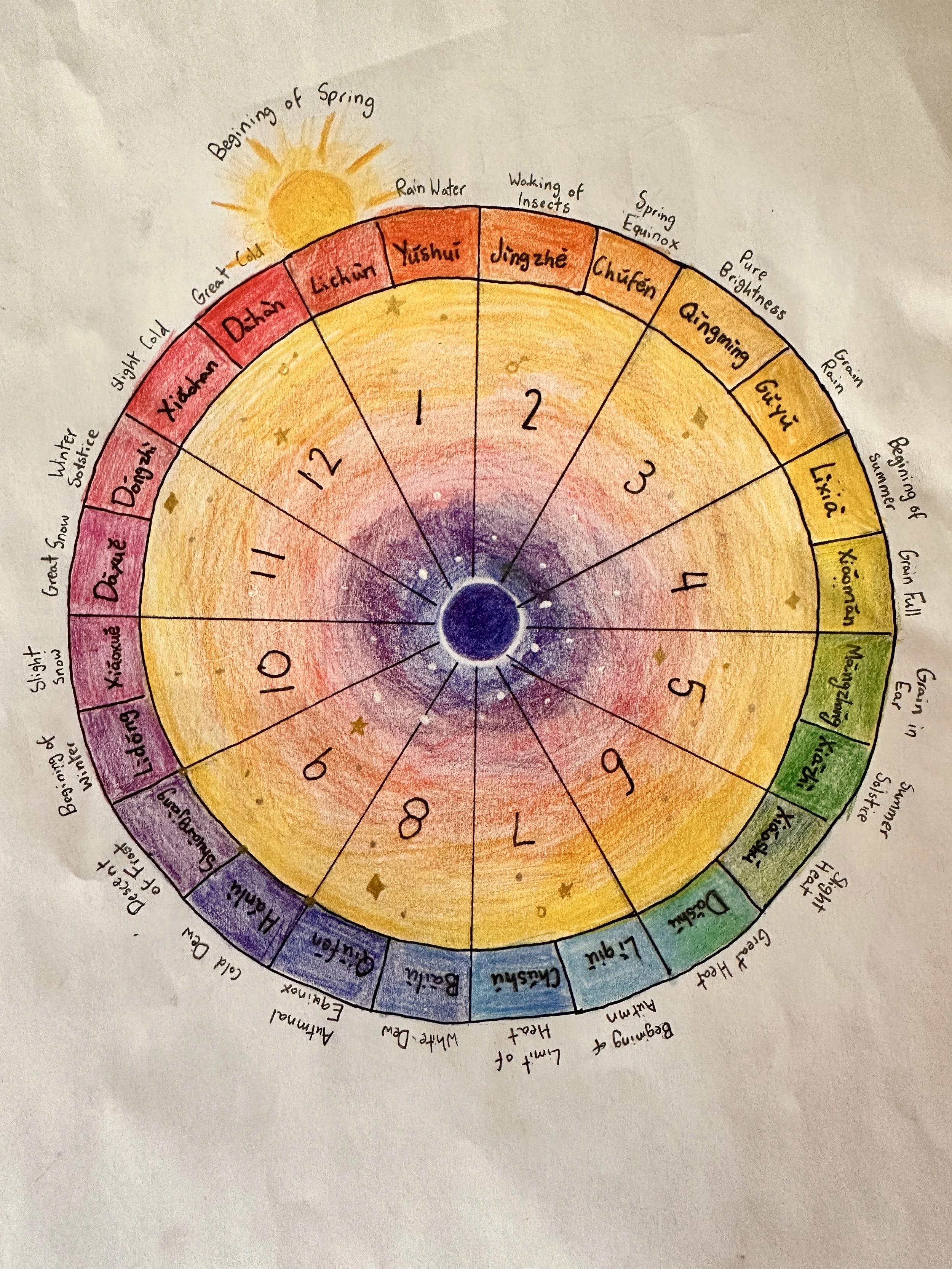
The Chinese lunisolar calendar
It was so interesting to learn about these things! The middle of February certainly doesn’t feel like a New Year where we live! The kids and I agreed that if we had to pick a day to be New Year’s Day, it would be close to the start of Spring in our region! That got us thinking about why people might have picked certain times to reflect the beginning of Spring and New Year’s in the past. Maybe in their regions, those times coincided with a change in the weather (longer days) and the thawing of the soil, paving the way for new plantings. Maybe having a big celebration like a New Year at the fag end of winter made the dreary cold days and gray skies tolerable?
We also wondered whether the belief in Hindu culture that some months are more auspicious than others is related to weather conditions. The monsoon season is typically not considered auspicious enough to have weddings, housewarming ceremonies, etc. Maybe at a time when people had to walk everywhere or use bullock carts, etc., travelling for such occasions in the monsoons would have been very uncomfortable! These are, of course, just our thoughts, but they are very interesting concepts to think about if we allow room in our minds for spaciousness.
If you are celebrating and learning about the Lunar New Year with your children, I hope you found some inspiration here!
Some project ideas for homeschoolers:
Making a Chinese lunisolar calendar
Making lucky red envelopes or bokjumoni
Learning how to bow (Sebae) to seek elders’ blessings
Making Chunlian or Spring Couplets (red paper scrolls featuring auspicious wishes for the New Year)
Making bookmarks with some Chinese characters for Good Luck and Fortune
Making paper lanterns
Drawing or painting the Chinese zodiac, either all of them or just the zodiac of the year.
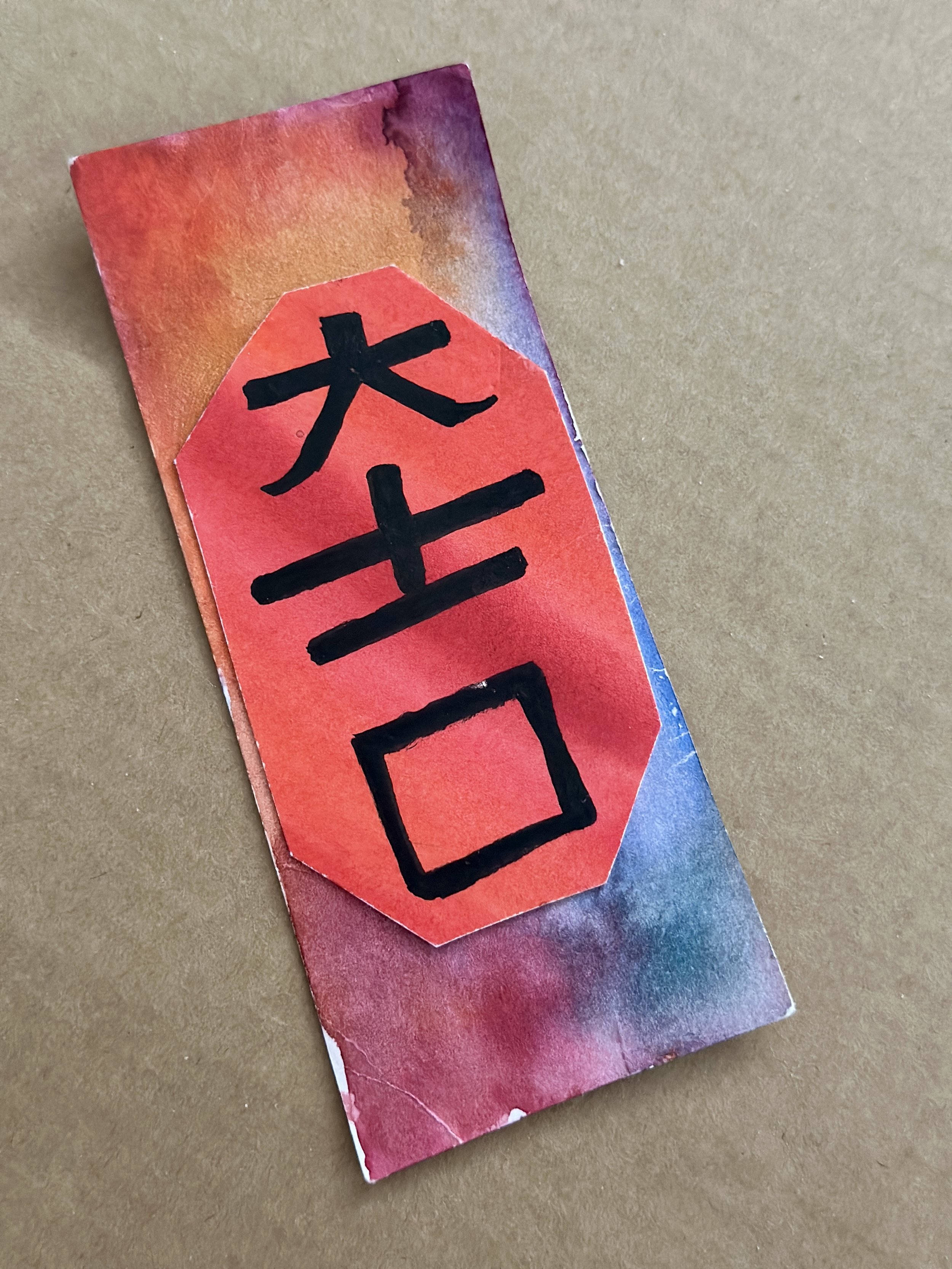
Good fortune
Some question ideas/writing prompts:
If you could pick a New Year’s Day, when would it be and why?
Why did so many cultures follow the moon to determine their seasons and festivals?
Would you pick the solar calendar, the lunar calendar, the lunisolar calendar, or would you make up your own?
If you could create your own zodiac, what 12 animals would you pick and why?
What would you like to receive in your little red envelope?